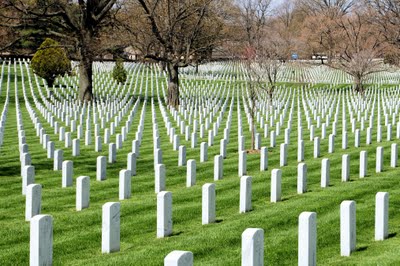
Monday, June 16, 2014

Thank you, Mr. Bush

By Capt. Fogg

Our efforts against Al Qaeda in Iraq and elsewhere have been much like the indiscriminate use of antibiotics, killing off the weak bacteria and letting the strong get stronger. The group they're now calling ISIS seems more radical and has more blind hatred for America and the West than the old guard and they're likely to "take back" the Iraq we set up for destruction, killing hundreds of thousands and putting control into the hands of brutal and incompetent people.There's not a hell of a lot we can do, even if that most strange of bedfellows Iran joins forces with us, setting new records in the World Cup of irony.

As much as that idiot John McCain and that fool Tony Blair would like to re-invade, it's not likely to happen, although some wag might suggest that the only reason to suggest such a thing would be an opportunity to call Obama cowardly and weak. They're already doing that and have been doing that since before he was elected. But speaking of irony, hardly anyone seems, except perhaps for Fareed Zakaria, to be calling attention to the weak, cowardly and dishonest George W. Bush who lied us into invading a country, a recent ally, where Al Qaeda was not, that had nothing to do with an attack on our country and doing it with an inadequate force and a non-existent plan for what to do after the conquest.

Read more »

Labels: , ,

Bookmark and Share

Sunday, September 15, 2013

Reading Now: Cornelius Ryan's The Longest Day

By Richard K. Barry

This weekend, for no reason other than that I recently found it on a local used bookstore shelf, I am reading Cornelius Ryan's The Longest Day. It is, of course, the famous history of the Allied landing in Europe on June 6, 1944.  The book was published in 1959. More people are probably familiar with the movie based on it, and of the same name, which came out in 1962. 

Perhaps I protest too much, but I find no contradiction being on the political left and yet fascinated by the history of war. No doubt there are books and films that glorify the endeavour in foolish, jingoistic, obnoxious ways. That sort of thing doesn't much interest me, thank you Sylvester Stallone. But well crafted accounts of women and men functioning under some of the most intense conditions imaginable should be of great interest to anyone concerned about the human condition. 

For example, I've recently been working my way through a collection of Martha Gellhorn's writings and read Steinbeck's Once There Was A War a while ago. But you might say that these are fine accounts by talented writers and not so much in the vein of Hollywood heroism that can be so annoying. Fair enough.

I don't know where you draw the line. Cornelius Ryan once said, "What I write about is not war but the courage of man." That may sound a bit over the top, but The Longest Day is written as a tale of survival, with little reference to the geo-political context and right and wrong. It is, in that way, very similar to The Band of Brothers HBO miniseries produced in the early 2000s, which I enjoyed immensely.


As I say, I may protest too much. Perhaps the line between glorifying war and graphically depicting the experiences of those who have had to endure it is clear enough. Maybe it never is. 

Labels: ,

Bookmark and Share

Monday, May 27, 2013

Memorial Day 2013

By Michael J.W. Stickings

(image)

On November 11 each year, Remembrance Day (also Veterans Day in the U.S.), I post a poem from the First World War, from a great poet of that apocalypse like Wilfred Owen or Isaac Rosenberg.

Today is Memorial Day in the U.S., and so today I want to post a poem by an American poet of that war.

The writer and editor Archibald MacLeish was born in Glencoe, Illinois in 1892. A future Librarian of Congress, recipient of three Pulitzer Prizes, as well as an expatriate in Paris during the swinging '20s (along with Hemingway, the Fitzgeralds, et al.), he served as an ambulance driver and artillery captain during the Great War.

MacLeish died in 1982. There's a good piece on him at the Poetry Foundation.

Here is one of his more well-known poems, "The Silent Slain":

We too, we too, descending once again
The hills of our own land, we too have heard
Far off -- Ah, que ce cor a longue haleine --
The horn of Roland in the passages of Spain,
the first, the second blast, the failing third,
And with the third turned back and climbed once more
The steep road southward, and heard faint the sound
Of swords, of horses, the disastrous war,
And crossed the dark defile at last, and found
At Roncevaux upon the darkening plain
The dead against the dead and on the silent ground
The silent slain --


My best to our American friends and family, and readers. Have a happy and safe Memorial Day. But do try to remember what it's all about.

Labels: , , , ,

Bookmark and Share

Friday, November 23, 2012

Frederick Varley, the (not) Great War, and the madness of Black Friday

By Michael J.W. Stickings

Frederick Varley was one of Canada's famed "Group of Seven" painters. Originally from England, he served in World War I and became an "official war artist," producing some astounding depictions of the horror of that senseless conflagration.

Here, for example, are For What? and German Prisoners. Recently reading a book about the Group of Seven, I meant to post them on Remembrance Day, but for some reason -- and I realize I'm engaging in some questionable analogizing here -- they seem appropriate on this Black Friday.

First because what they depict is similar, I think, to the state of our culture/civilization as reflected in the madness that is Black Friday.

And second because we'd be much better people, and have a much healthier society, if we spent a bit more time thinking about the horrors of the "Great War," among other such things, and a bit less time waiting in line at Best Buy and then trampling everyone and everything in our consumer-crazed path to get hold of the latest tech gadget or other insane bargain that we think will somehow fill the sorrowful emptiness that lies within each and every one of us.


Labels: , , ,

Bookmark and Share

Monday, November 12, 2012

Reflections on Veterans Day

By Frank Moraes

(Ed. note: I meant to post this yesterday. Alas. It still rings true today, the federal holiday, as it does every other day of the year. For my own thoughts, see my Remembrance Day / Veterans Day 2012 post from yesterday. I would also note that I included this incredible poem by Wilfred Owen in my Remembrance Day 2009 post. -- MJWS)

I honor the service that individuals make to the collective. However, when Veterans Day rolls around, I have a hard time thinking of service. Instead, I think about sacrifice -- even more: useless sacrifice. Almost without exception (and even those exceptions are muddled), wars are nothing but turf battles where weak men die for the sake of powerful men's interests. When I think of war, I don't think of heroic men in a life-and-death struggle; I think of two ant colonies destroying themselves because it is in their DNA.

Thus, I think of Veterans Day as a somber occasion. It is a time to remember those victims who have been harmed by our pathological sociology. The normal kinds of Veterans Day celebrations of hubristic nationalism are part of the problem and only lead to more victims.

On this day it seems natural to salute all those who have been harmed by our war making. It doesn't matter to me whether they did so voluntarily or not. The truth is that I don't think anyone really does this voluntarily. (Of course, I don't believe in free will either.)

In honor of all these people, I offer you a poem by Wilfred Owen -- himself a victim of war: World War I. He was killed just one week before the end of that war. And as you see in the poem, he understood the nature of war. (For the record, "Dulce et Decorum est pro patria mori" means, "It is sweet and right to die for your country." It is from one of Horace's Odes, which are often lovely but from time to time nationalistic and horrible.)

Bent double, like old beggars under sacks,
Knock-kneed, coughing like hags, we cursed through sludge,
Till on the haunting flares we turned our backs
And towards our distant rest began to trudge.
Men marched asleep. Many had lost their boots
But limped on, blood-shod. All went lame; all blind;
Drunk with fatigue; deaf even to the hoots
Of tired, outstripped Five-Nines that dropped behind.
Gas! Gas! Quick, boys!—An ecstasy of fumbling,
Fitting the clumsy helmets just in time;
But someone still was yelling out and stumbling,
And flound'ring like a man in fire or lime . . .
Dim, through the misty panes and thick green light,
As under a green sea, I saw him drowning.
In all my dreams, before my helpless sight,
He plunges at me, guttering, choking, drowning.
If in some smothering dreams you too could pace
Behind the wagon that we flung him in,
And watch the white eyes writhing in his face,
His hanging face, like a devil's sick of sin;
If you could hear, at every jolt, the blood
Come gargling from the froth-corrupted lungs,
Obscene as cancer, bitter as the cud
Of vile, incurable sores on innocent tongues,
My friend, you would not tell with such high zest
To children ardent for some desperate glory,
The old Lie; Dulce et Decorum est
Pro patria mori.

Afterword

Without life, there is no chance for justice.

(Cross-posted at Frankly Curious.)

Labels: , , , , ,

Bookmark and Share

Sunday, November 11, 2012

Remembrance Day / Veterans Day 2012

By Michael J.W. Stickings

(This is a reprint of the post I put up last year, but with a different poem by Rosenberg. Last year it was the justifiably famous "Break of Day in the Trenches," one of the greatest of all war poems (of any war, not just WWI). This year it's "Dead Man's Dump," a remarkable portrait of the brutality of war.)

Today is a day to remember those who served, those who fought, those who gave their lives. But it is also -- and we must not lose sight of this -- a day to remember the horror of war. While many of those who served did so nobly, war itself is not noble, even when somehow justifiable, and undeniably necessary, as was World War II.

Even if we should remember today not just the so-called " Greatest Generation" (a made-up American concept/conceit) that fought that war but also the countless innocent civilians who suffered and died (in that war as in all wars), as well as the incredible devastation of that war, not just on "our" side but on "their" side as well, from Dresden to Hiroshima. There may be ideals of good and evil, but there is an awful lot in between.

But World War I, the "Great War," the specific war this day commemorates? That was a pointless, generation-destroying abomination that resulted in nothing but another war, a continuation of the war, 20 years later. It was a war of dying empires, heavily militarized after a century of relative peace following the Napoleonic Wars and the Congress of Vienna, the generals and their political masters moving pieces around on their gameboard, the lines moving a bit this way, a bit that way, all for some greater glory that existed only in their illusions and delusions, while thousands upon thousands were dying for nothing at all on the fields and in the trenches. Think of the Battle of the Somme, one of the Great War's key turning points, with a death toll over a million. It was one of the worst, but it was also one of many such devastations. It is impossible, I think, to come fully to terms with such horror.

Let us, then, think not of the usual red poppy but of the white one, which symbolizes peace (and not so much military valour and certainly not the "nobility" of war).


Here is the intensely powerful "Dead Man's Dump" by Isaac Rosenberg, a somewhat lesser-known Great War poet (compared to the likes of Owen or Sassoon) but still a very fine one:

The plunging limbers over the shattered track
Racketed with their rusty freight,
Stuck out like many crowns of thorns,
And the rusty stakes like sceptres old
To stay the flood of brutish men
Upon our brothers dear.

The wheels lurched over sprawled dead
But pained them not, though their bones crunched,
Their shut mouths made no moan.
They lie there huddled, friend and foeman,
Man born of man, and born of woman,
And shells go crying over them
From night till night and now.

Earth has waited for them,
All the time of their growth
Fretting for their decay:
Now she has them at last!
In the strength of their strength
Suspended--stopped and held.

What fierce imaginings their dark souls lit?
Earth! have they gone into you!
Somewhere they must have gone,
And flung on your hard back
Is their soul's sack
Emptied of God-ancestralled essences.
Who hurled them out? Who hurled?

None saw their spirits' shadow shake the grass,
Or stood aside for the half used life to pass
Out of those doomed nostrils and the doomed mouth,
When the swift iron burning bee
Drained the wild honey of their youth.

What of us who, flung on the shrieking pyre,
Walk, our usual thoughts untouched,
Our lucky limbs as on ichor fed,
Immortal seeming ever?
Perhaps when the flames beat loud on us,
A fear may choke in our veins
And the startled blood may stop.

The air is loud with death,
The dark air spurts with fire,
The explosions ceaseless are.

Timelessly now, some minutes past,
Those dead strode time with vigorous life,
Till the shrapnel called 'An end!'
But not to all. In bleeding pangs
Some borne on stretchers dreamed of home,
Dear things, war-blotted from their hearts.

Maniac Earth! howling and flying, your bowel
Seared by the jagged fire, the iron love,
The impetuous storm of savage love.
Dark Earth! dark Heavens! swinging in chemic smoke,
What dead are born when you kiss each soundless soul
With lightning and thunder from your mined heart,
Which man's self dug, and his blind fingers loosed?

A man's brains splattered on
A stretcher-bearer's face;
His shook shoulders slipped their load,
But when they bent to look again
The drowning soul was sunk too deep
For human tenderness.

They left this dead with the older dead,
Stretched at the cross roads.

Burnt black by strange decay
Their sinister faces lie,
The lid over each eye,
The grass and coloured clay
More motion have than they,
Joined to the great sunk silences.

Here is one not long dead;
His dark hearing caught our far wheels,
And the choked soul stretched weak hands
To reach the living word the far wheels said,
The blood-dazed intelligence beating for light,
Crying through the suspense of the far torturing wheels
Swift for the end to break
Or the wheels to break,
Cried as the tide of the world broke over his sight.

Will they come? Will they ever come?
Even as the mixed hoofs of the mules,
The quivering-bellied mules,
And the rushing wheels all mixed
With his tortured upturned sight.
So we crashed round the bend,
We heard his weak scream,
We heard his very last sound,
And our wheels grazed his dead face.

Labels: , , , ,

Bookmark and Share

Monday, May 28, 2012

A different perspective on the glorification of war


Much as war may sometimes be necessary and gratitude for those who serve appropriate, it is probably best we glorify the endeavor as little as possible so as to discourage future occurrences as much as possible. Or, put differently:

Perhaps when we remember wars, we should take off our clothes and paint ourselves blue and go on all fours all day long and grunt like pigs. That would surely be more appropriate than noble oratory and shows of flags and well-oiled guns.

-- Kurt Vonnegut, Cat's Cradle

Labels: ,

Bookmark and Share

A Republican voice of reason (if you go back 60 years)


Here is an interesting quote on war on this Memorial Day from, perhaps, an unlikely source:

Every gun that is made, every warship launched, every rocket fired, signifies in the final sense a theft from those who hunger and are not fed, those who are cold and are not clothed.

-- Dwight D. Eisenhower

This is from an address called the "Chance for Peace" speech. It was delivered on April 16, 1953, shortly after the death of Joseph Stalin.

It is well documented that, as a former military man, President Eisenhower was concerned about increases in military spending. Many people are aware of his comments on the matter in his farewell address of January 17, 1961, which is also commonly known as his "military-industrial complex" speech.

Can you imagine a Republican leader today saying anything of the kind? I think not.

Labels: ,

Bookmark and Share

Thoughts on Memorial Day 2012


Today is Memorial Day in the United States. I am not quite sure what the appropriate wish is for this day. It's hardly a happy occasion, but is it a day to remember how great are the sacrifices required by war and how considered our decisions must be before we engage in it.

I am always troubled by the attempt of some to make regard for our military a left-right issue. I've never understood this and have a hell of time getting my head around the sentiment. Some on the right seem to think that everyone on the left is naturally presupposed to cowardice and would refuse to defend the country even if the cause was clearly just. Some on the left seem to think that everyone on the right enjoys a good war every now and again just for the hell of it. Foolishness abounds on both sides.

Although I have never had to put myself in harms way for my country, I believe that most who have are likely the greatest ambassadors for peace having seen what it is really like and knowing that there should always be very good reasons for making war.

Over the past few months I've read various accounts of U.S. involvement in wars. Most recently I read John Toland's The Last 100 Days about the end of the WWII. I read Steinbeck's Once There Was A War and Stephen Ambrose's Citizen Soldiers, both also about WWII. I reread Michael Herr's Dispatches and We Were Soldiers Once and Young by Lt. General Hal Moore and Joseph Galloway about the war in Vietnam. I even read a book called On Killing by Lt. Col. Dave Grossman, an account of the psychological ravages of having to kill in combat, a book actually used in military training.

I have always had an interest in military matters, though this hardly makes me any kind of expert. I have discovered, though, that the theme occurring most often in nearly everything I have heard or read about soldiers in war is that their primary concern is survival but perhaps even primarily providing assistance to their comrades, to do all they can to ensure as many survive as possible. Killing is hard. Doing what has to be done to protect one's fellows is most frequently the goal, though it obviously involves killing. I take comfort in this idea if it is true that under duress our minds are most strongly focused on the safety of those with whom we stand.

I understand that war and the decisions to go to war are among the most politically charged of any. I understand why these decision are sometimes couched in terms of left and right, but that is not the soldiers concern. When it comes to them, our political decision-makers put them in harms way. Soldiers do what they are asked to do if they serve well and it is for this reason they are honoured.

Despite the fact that some soldiers in every war do not comport themselves honourably, I suspect that most do. Whatever the rights and wrongs of American involvement in Iraq and Afghanistan, and I think the wrongs are most prominent, I am glad that there has been little evidence of vilifying soldiers who have served, little name-calling or other thoughtless acts as we have seen in the past.

The politicians make the decision. We civilians have a right to argue with them and vote against them, but the soldiers who carry out the orders do what they are asked to do. It would be a better world if we didn't need them at all, but we do.

We cannot know in advance how just the next war will be, should it come. Let's agree that it is good some are prepared to serve.

So, on this Memorial Day, whatever else may be true, I hope as many men and women in uniform as possible are successful in keeping themselves and their friends safe. And let us also think of the ones for whom that was not possible. It shouldn't be difficult to consider this a strongly bipartisan perspective.

(Cross-posted at Lippmann's Ghost.)

Labels: , ,

Bookmark and Share

Wednesday, April 25, 2012

John Steinbeck's Once There Was A War


By Richard K. Barry


For some reason I got heavily into reading books about war over the winter. I'm generally not a great fan of war, all that death and destruction. Still, as a concept it has played a fairly significant role in the shape of the world we know, as unfortunate as that is.

I'm reasonably certain that trying to understand war, the experiences of people caught up in it, and the geopolitical consequences of it, doesn't make me a hawk. I'm grateful that I have never had to be anywhere near it, but I am fascinated by it.

Anyway, enough explaining, apologizing, whatever.

In the middle of looking for things on the subject to read, I walked over to one of my bookcases and pulled down John Steinbeck's Once There Was A War. The book was published in 1958. It is a collection of articles written by Steinbeck while he was a war correspondent in Europe for the New York Herald Tribune from June to December 1943. The book seems to be categorized as a non-fiction novel.

Here's a very useful entry from the Wiki on the book:

Steinbeck did not report 'straight news', as he put it: he did not cover battles, or interview national or military leaders. As befitted the author of The Grapes of Wrath, Steinbeck wrote about the experiences of the ordinary people, those who were doing the actual fighting, and those who did the vast number of unglamorous but vital support jobs which kept the armed forces operating.


Obviously, as these were newspaper dispatches, each story is quite brief. The entire book isn't 200 pages. As the entry also indicates:
Steinbeck's articles include descriptions of life on a troop transporter, an account of the liberation of a small Sicilian town, a description of how homesick US soldiers tried to grow their native vegetables in the English garden where they billeted, and an account of how a detachment of US paratroopers tricked the German garrison at Ventotene into surrendering.


I've read my share of Steinbeck, the ones that most people know. I hadn't come across this one, though it was on my shelf, not that it's unusual that I would be unaware of a book on my own shelf.

It's a great little read by one of the best writers of the 20th century.


(Cross-posted at Lippmann's Ghost.)

Labels: , ,

Bookmark and Share

Friday, November 11, 2011

Remembrance Day / Veterans Day 2011


Today is a day to remember those who served, those who fought, those who gave their lives. But it is also -- and we must not lose sight of this -- a day to remember the horror of war. While many of those who served did so nobly, war itself is not noble, even when somehow justifiable, and undeniably necessary, as was World War II.

Even if we should remember today not just the so-called "Greatest Generation" (a made-up American concept/conceit) that fought that war but also the countless innocent civilians who suffered and died (in that war as in all wars), as well as the incredible devastation of that war, not just on "our" side but on "their" side as well, from Dresden to Hiroshima. There may be ideals of good and evil, but there is an awful lot in between.

But World War I, the "Great War," the specific war this day commemorates? That was a pointless, generation-destroying abomination that resulted in nothing but another war, a continuation of the war, 20 years later. It was a war of dying empires, heavily militarized after a century of relative peace following the Napoleonic Wars and the Congress of Vienna, the generals and their political masters moving pieces around on their gameboard, the lines moving a bit this way, a bit that way, all for some greater glory that existed only in their illusions and delusions, while thousands upon thousands were dying for nothing at all on the fields and in the trenches. Think of the Battle of the Somme, one of the Great War's key turning points, with a death toll over a million. It was one of the worst, but it was also one of many such devastations. It is impossible, I think, to come fully to terms with such horror.

Let us, then, think not of the usual red poppy but of the white one, which symbolizes peace (and not so much military valour and certainly not the "nobility" of war).

Here, one of the greatest of the Great War poems, is the very moving "Break of Day in the Trenches" by Isaac Rosenberg, a somewhat lesser-known Great War poet (compared to the likes of Owen or Sassoon) but still a very fine one:

The darkness crumbles away.
It is the same old Druid Time as ever.
Only a live thing leaps my hand,
A queer sardonic rat,
As I pull the parapet's poppy
To stick behind my ear.
Droll rat, they would shoot you if they knew
Your cosmopolitan sympathies.
Now you have touched this English hand
You will do the same to a German
Soon, no doubt, if it be your pleasure
To cross the sleeping green between.
It seems, odd thing, you grin as you pass
Strong eyes, fine limbs, haughty athletes,
Less chanced than you for life,
Bonds to the whims of murder,
Sprawled in the bowels of the earth,
The torn fields of France.
What do you see in our eyes
At the shrieking iron and flame
Hurl'd through still heavens?
What quaver -- what heart aghast?
Poppies whose roots are in man's veins
Drop, and are ever dropping,
But mine in my ear is safe --
Just a little white with the dust.

Labels: , ,

Bookmark and Share

Monday, June 06, 2011

This day in history - June 6, 1944: The Allied invasion of Normandy


Having been born just over a decade after the end of WWII, I grew up hearing stories about the war and watching documentaries like The World at War and Victory at Sea. I suspect that few of my generation would be unable to identify June 6, 1944 as the day of the Allied invasion of Normandy, which began and essential part of the bloody process of defeating the Nazis on Continental Europe.

The declaration of war in Europe, the bombing of Pearl Harbour, VE-Day, and VJ-Day all occurred on dates many of us still recall.

As I've remarked before, WWII has been called the last good war and it does seem to have been the last war about which so many of us took any significant interest in learning the history.

I don't exactly know what it means that so few of us have taken the time to learn much about our current wars in Iraq and Afghanistan. Are there likely to be remembered dates and battles that will be significant to people in 10, 20, 50 years? (Aside, of course, from 9/11, which is different).

It's not my intention to glorify war, it's only that the costs are so high that if we paid more attention we'd be in a better position to judge if the sacrifices are worth it. It is surely not something we should take for granted.

(Cross-posted at Lippmann's Ghost.)

Labels: , ,

Bookmark and Share

Sunday, May 08, 2011

This day in history - May 8, 1945: Victory in Europe Day


Here's that famous picture again. When I sat down today to do the little bit of research required to post the "This day in history" feature I realized pretty quickly that this was
Victory in Europe Day, known as VE-Day. I was thinking that somebody, once upon a time, branded WWII as "the last good war." I guess.

I was part of the generation whose parents were formed first by The Great Depression and then by WWII. I grew up listening to the stories particularly from my father and uncles who were in the service after Pearl Harbor was bombed. Lucky for my father, he was stationed in Hawaii after the attack and never saw any real action because it was never attacked again, although no one knew that would be the case at the time.

I had uncles who marched with Patton's Third Army across Europe.

Many years ago when all of my uncles were still alive and one evening were regaling us with stories about their wartime experiences, one of my cousins, with wide eyes, excitedly said that he wished he could have been there. Every one of the uncles answered, almost in unison, "no you don't."

So much for the glory of war.

(Cross-posted to Lippmann's Ghost.)

Labels: ,

Bookmark and Share

Sunday, December 05, 2010

Restrepo: Remembering again that war is real and John Wayne is long gone


I saw a documentary a couple of days ago about American troops in Afghanistan. The film was made by Sebastian Junger and Tim Hetherington. It's called Restrepo.

What I found most interesting was a comment by the filmmakers that they have received strong positive comment both from those opposed to the war and those more hawkish.

This is the promotional description:

RESTREPO is a feature-length documentary that chronicles the deployment of a platoon of U.S. soldiers in Afghanistan's Korengal Valley. The movie focuses on a remote 15-man outpost, "Restrepo," named after a platoon medic who was killed in action. It was considered one of the most dangerous postings in the U.S. military. This is an entirely experiential film: the cameras never leave the valley; there are no interviews with generals or diplomats. The only goal is to make viewers feel as if they have just been through a 90-minute deployment. This is war, full stop. The conclusions are up to you.

Whatever one's politics, I would hope that this film reminds them that we should never forget what we do to soldiers when we put them in a combat situation, that we should always make political decisions with a clear understanding of their implications for everyone involved.

I thought the film was extremely well done. I found it moving and an honest attempt to do justice to the experiences of soldiers doing the fighting. I highly recommend it. 

There are a lot of things I would want to say about what makes young men and women join the military and go to war. There are things about the relationship between decision-makers and those who carry out their orders about which, in a democracy, we should always be mindful.

There are things about what I think are justifiable views on patriotism and other forms less savory that I believe we should discuss.


But these weren't the kinds of thoughts I was having as I watched this film.

Maybe it's because I grew up in the kind of working-class neighbourhood in which a lot of kids went off to war, some as draftees and some who joined. Maybe this is the reason I have a lot of compassion for those who find themselves being shot at and having friends die in conflicts the political dynamics of which are probably not very clear to them.

I was too young to go to
Vietnam but not too young to know of families devastated by its impact. Today, largely due to social class and maybe age, I don't know many young people who have gone off to war, but it's not a total abstraction to me either.

My workplace is not far from the coroner's office where some soldiers killed in
Afghanistan are brought once repatriated. More than once I have stood on the sidewalk to watch a long procession of cars wend its way through downtown streets. On one occasion I saw what was undoubtedly a young widow in the lead car with the window open. I could see her clearly. The look of pain on her face is impossible to describe – there's nothing abstract about that at all.

All the debates: why young men and women choose to go to war; the extent that economic class plays an important role; whether we should ever have been in these wars at all; what supporting our troops really means – these things are important discussions.

I'd suggest you find this documentary – Restrepo – and that you remember that wars are fought by young people who, once the shooting starts, seem to want only to get back home.

These wars have been going on too long, so long that we have forgotten the sacrifices that we are expecting of our soldiers, except in speeches that have become so clichéd we no longer think about what the words mean.

So little do we now seem to care about the people we put in harms way that it wasn't even an honourable mention as an issue in the last round of campaigning.

How sad is that?


(Cross-posted to Lippmann's Ghost.)

Labels: , , ,

Bookmark and Share

Thursday, November 11, 2010

Remembrance Day 2010


It is a day to remember those who served, those who fought, those who gave their lives. But it is also a day to remember the horror of war. While many of those who served did so nobly, war itself is not noble, even if it is somehow justifiable, and undeniably necessary, as was World War II.

But World War I, the "Great War," the specific war this day commemorates? That was a pointless, generation-destroying abomination that resulted in nothing but another war, a continuation of the war, 20 years later. It was a war of dying empires, heavily militarized after a century of relative peace following the Napoleonic Wars and the Congress of Vienna, the generals and their political masters moving pieces around on their gameboard, the lines moving a bit this way, a bit that way, all for some greater glory that existed only in their illusions and delusions, while thousands upon thousands were dying for nothing at all on the fields and in the trenches. Think of the Battle of the Somme, one of the Great War's key turning points, with a death toll over a million. It was one of the worst, but it was also one of many such devastations. It is impossible, I think, to come fully to terms with such horror.

Let us, then, think not of the usual red poppy but of the white one, which symbolizes peace (and not so much military valour and certainly not the "nobility" of war).

Here is the very moving "Break of Day in the Trenches" by Isaac Rosenberg, a somewhat lesser-known Great War poet (compared to the likes of Owen or Sassoon) but still a very fine one:

The darkness crumbles away.
It is the same old Druid Time as ever.
Only a live thing leaps my hand,
A queer sardonic rat,
As I pull the parapet's poppy
To stick behind my ear.
Droll rat, they would shoot you if they knew
Your cosmopolitan sympathies.
Now you have touched this English hand
You will do the same to a German
Soon, no doubt, if it be your pleasure
To cross the sleeping green between.
It seems, odd thing, you grin as you pass
Strong eyes, fine limbs, haughty athletes,
Less chanced than you for life,
Bonds to the whims of murder,
Sprawled in the bowels of the earth,
The torn fields of France.
What do you see in our eyes
At the shrieking iron and flame
Hurl'd through still heavens?
What quaver -- what heart aghast?
Poppies whose roots are in man's veins
Drop, and are ever dropping,
But mine in my ear is safe --
Just a little white with the dust.

Labels: , ,

Bookmark and Share

Sunday, May 30, 2010

You and whose army?

By Capt. Fogg

It's Memorial Day weekend again in the New South. It's nice to know they've finally accepted a holiday they once loathed. Of course it was Decoration Day until 1968 and after I was grown and had a family. It was as you know, about decorating the graves of Union Soldiers and after the next horror of the Great War, the graves of the 117,465 American dead: a day of solemn reflection.

But by the time they changed it to Memorial Day to make it more compatible with our imperialism at the height of the senseless horror in Vietnam, it was about Dad's cremated Hamburgers and Indy; parades and patriotic hoo-ha, but perhaps it's because I now live in the South, it's taken on a new tone. Perhaps too, it's because I live in an area flooded with retired military folks filled with their own importance and those employed by the notorious Military- Industrial Complex -- but my in-box is once again flooded with glorious stories about our glorious military and the glorious things they do. A good part of them are hoaxes and of course there are no mentions of our heroes of My Ly 4 or Abu Ghraib or of the recent glorious heroes who accidentally slaughtered 30 or so civilians using robot planes in air conditioned comfort from halfway around the world.

No, what I get are bogus stories about Marines rescuing babies on 9/11/01 and how it is the Veterans" we owe our freedom of religion, press, speech and the rest of the rights we've had abridged because of the martial spirit of the times -- not the constitution, the courts or the Government of the United States.

Have we forgotten that the biggest enemy of freedom on this continent was the American South? Was anything we can call our own freedom at risk in most of our wars? Andrew Jackson's slaughter and deportation of the Seminoles? the use of Federal troops in slave raids into Florida? The Mexican War? The Spanish American War? The war against Philippine independence? What kind of threat to our freedom of speech necessitated suppressing free elections in Vietnam or the killing of two million civilians? What threat to our freedom of Religion was posed by Iraq? What threat were flower carrying kids in Ohio that they needed to be shot in the back by American troops? Were the troops driving armored vehicles down Chicago's State Street in 1968 there to support our right to assembly or to shut us up?

It' s not that I have any disrespect for veterans, living or dead, but our Constitution wasn't written by the Generals, no foreign power is any threat to it and that we still pay any attention to the Bill of Rights owes as much to the "activist" courts and the ACLU as to anything else. It owes nothing whatever to the Tea Bag flag wavers who hate government power unless it's carrying guns. It owes nothing to Macho flag wavers from John Wayne to Bomb-bomb McCain.

Memorial day has become an encomium not to dead soldiers; an expression not of profound grief. It's not a day when we mourn our losses or of any remembrance of the horror of war and militarism, but to celebrate living veterans, sing praise to the Armed forces and to the glory of war itself. It's a day we now use to decorate ourselves, congratulate ourselves on our military prowess and this in a country that's been fighting all my life but hasn't been on the winning side of a war since 1945. It's a day too often used to obscure the real threats to freedom with red white and blue bunting and it's good to remember that the same folks crowing about military defense of freedom are quite happy to require anyone with tan skin to carry proof of citizenship at all times, quite happy to give the local police the power of Federal Marshals and to forget all about warrants and probable cause. What army is going to protect us against our own smug racism, bigotry and expansionism?

(Cross posted from Human Voices)

Labels: , , ,

Bookmark and Share

Friday, December 11, 2009

Reflections on Obama's Nobel speech


I don't have all that much to add to Carl's post. Suffice it to say that I thought it was a fantastic speech comparable to the best he's ever given, including last year's speech on race in Philadelphia. (Video below.)

We can argue over the particulars, over the substance, but the speech revealed Obama to be, well, what we knew he was, which is as close to a genuine philosopher as we are likely to get in the White House, a man of profound thought who wrestles with some of the key issues facing America and the world today -- issues of war and peace, of life and death -- some of the issues that have been central to the human condition from the very beginning.

Allow me to quote a few commentators who, in my view, got it right:


[T]his may have been the deepest and most elegaic speech of Obama's presidency. But what a strange one it was. Obama is a man trapped amongst the contradictions created by America's awkward place in the post-Bush world...

The rest of Obama's speech was movingly inspirational. Having conceded that war can't be wished away, Obama laid out a vision of human nature and progress that is fundamental to his view of the world.

See also Jonathan Chait on Obama's "foreign policy worldview."


[T]his was a very good and serious speech, which like many of his major addresses -- the Inaugural address, the one in Prague about nuclear weapons, the one in Cairo on relations with the Islamic world -- will stand re-reading and close inspection, and which shared an obvious intellectual and structural architecture with all his other major addresses. Those trademark elements include:

The embrace of contradictions (in this case, a defense of war as a means to peace); the long view; the emphasis on institution-building; the concern about the distortion of religious and ethnic loyalties; and above all a consciousness that was once called Niebuhrian and at this rate will someday be "Obamian," which emphasizes the importance of steady steps forward in an inevitably flawed world.


That was our president today and I couldn't have been prouder. Unflinching, reversing the muddled message of last week, once again regaining the moral authority of why we fight... Today's speech unraveling last week's tangled rhetorical mess that had Pres. Obama talking about 30,000 more troops in Afghanistan, which I remain against, while simultaneously talking about a draw down by July 2011, which came off cravenly political, while ignoring the importance of why we're in Afghanistan, which is in large part humanitarian, and the genesis of what brought us there.

The speech today begins a righting of what went terribly wrong on Obama's Afghanistan strategy speech. The tone and content was pitch perfect, including the bravery of taking on whether he deserves the Nobel or not.

This is not to say -- and I must stress this -- that I agreed with everything in the speech. Like Chait, I found Obama's discussion of genocide weak. What is needed there is an aggressive commitment to fight genocide, as in Darfur, not just a desire to stand together in righteous opposition to it. And while I appreciate the careful distinction between just and unjust wars, and while the Afghan War may for a time have been just, I continue to oppose Obama's Afghan surge, the 30,000-troop increase he announced just last week, and to think that the Afghan War is not just unwinnable but untenable, that the U.S. and its NATO would do well to withdraw now and to give up on the unlikely possibility of achieving political and social stability in that country, keeping some military presence in the region to target Taliban and al Qaeda forces. (I'm not against nation-building, as I was not against the Afghan War early on. I just don't think it makes much sense to stay there without a clear purpose and achievable goal.)

And yet, I found the tension in the speech between realism and idealism, with Obama searching for the right balance, compelling and persuasive. Indeed, what the speech revealed is that Obama gets it -- maybe not in policy terms, where there is room for disagreement, but in philosophical terms, which is deeply reassuring. It just remains to be seen whether Obama can find that right balance by reconciling the contradictions, if that is even possible, and then whether he can actually translate his Niebuhrianism into a cohesive foreign policy that adequately addresses not just the Iraq and Afghan wars but Iran, North Korea, Darfur, and the world's other hotspots, the myriad challenges facing America, including global terrorism.

Labels: , , , , ,

Bookmark and Share

Wednesday, November 11, 2009

Remembrance Day 2009


It is a day to remember those who served, those who fought, those who gave their lives. But it is also a day to remember the horror of war. While many of those who served did so nobly, war itself is not noble, even if it is somehow justifiable, and undeniably necessary, as was World War II.

But World War I, the "Great War," the specific war this day commemorates? That was a pointless, generation-destroying abomination that resulted in nothing but another war, a continuation of the war, 20 years later. It was a war of dying empires, heavily militarized after a century of relative peace following the Napoleonic Wars and the Congress of Vienna, the generals and their political masters moving pieces around on their gameboard, the lines moving a bit this way, a bit that way, all for some greater glory that existed only in their illusions and delusions, while thousands upon thousands were dying for nothing at all on the fields and in the trenches. Think of the Battle of the Somme, one of the Great War's key turning points, with a death toll over a million. It was one of the worst, but it was also one of many such devastations. It is impossible, I think, to come fully to terms with such horror.

Let us not kid ourselves. Let us not forget that today is not a day to celebrate war, or to romanticize it.

The poem often recited on Remembrance Day is John McCrae's "In Flanders Fields." It is a beautiful poem. McCrae was a field surgeon, then the head of a Canadian hospital in northern France. He died in 1918, the victim of pneumonia, a casualty, in a way, of war.

Another casualty was Wilfred Owen, perhaps the greatest of the Great War poets. He was killed at the Battle of the Sambre on November 4, 1918 -- just a week before Armistice Day, the end of the war. This is one of his finest poems, "Dulce et Decorum Est":

Bent double, like old beggars under sacks,
Knock-kneed, coughing like hags, we cursed through sludge,
Till on the haunting flares we turned our backs
And towards our distant rest began to trudge.
Men marched asleep. Many had lost their boots
But limped on, blood-shod. All went lame; all blind;
Drunk with fatigue; deaf even to the hoots
Of tired, outstripped Five-Nines that dropped behind.

Gas! Gas! Quick, boys!–An ecstasy of fumbling,
Fitting the clumsy helmets just in time;
But someone still was yelling out and stumbling
And flound'ring like a man in fire or lime...
Dim, through the misty panes and thick green light,
As under a green sea, I saw him drowning.

In all my dreams, before my helpless sight,
He plunges at me, guttering, choking, drowning.

If in some smothering dreams you too could pace
Behind the wagon that we flung him in,
And watch the white eyes writhing in his face,
His hanging face, like a devil's sick of sin;
If you could hear, at every jolt, the blood
Come gargling from the froth-corrupted lungs,
Obscene as cancer, bitter as the cud
Of vile, incurable sores on innocent tongues,–
My friend, you would not tell with such high zest
To children ardent for some desperate glory,
The old Lie: Dulce et decorum est
Pro patria mori.

It is a lie, that is, that it is sweet and right to die for your country. That may not be the sentiment one hears on Remembrance Day, when what is stressed is the opposite, the noble sacrifice of those who served, but it is a more accurate one. This is not to diminish that sacrifice, without which we would not be what we are today, it is just to note that the bitter truth about war mustn't be forgotten.

Labels: , ,

Bookmark and Share

Thursday, October 08, 2009

Afghanistan is a riddle wrapped in an enigma for the U.S.

By Carol Gee

Afghanistan is grabbing its share of headlines this week. Multiple intense meetings are taking place at the White House. Various of the key players have come down publicly on one side or the other about what to do next. Violence continues in "Af-Pak," as it became known early in the Obama administration. Defining who the primary adversaries are in the region has not been settled. Friction is being between the military and civilian elements within the governments of both the U.S. and Pakistan. And everybody is weighing in with opinions. Today's post is my attempt to clarify the basic elements of the current situation.

A suicide car bomb killing at least 12 people was intended for the Indian embassy in Kabul, according to the New York Times (10/8/09). The previous day the same paper published an analysis by Peter Baker and Eric Schmitt that explains that the Afghan war debate now leans towards a plan to focus on a campaign against Al Qaeda in Pakistan. It is not known whether this view is accepted by the entire Obama war cabinet.

The central debate question seems to hinge on the nature of the current relationship between the Taliban and Al Queda. The administration pointed out to the Times in an anonymous interview that there are fewer than 100 Al Qaeda fighters left in Afghanistan. Recent successes with surgical strikes against Al Qaeda in Afghanistan may make that country less central to U.S. strategy. Another anonymous official characterizes the strategy as one of viewing the Taliban, militants local to Afghanistan and jihadist Al Qaeda as very different. President Obama has reiterated that his goal is to protect the United States and to prevent the jihadis from getting safe haven. Mark Knoller reported on Twitter that "a WH official says Obama received a 'comprehensive intelligence and counterterrorism assessment' on political & diplomatic situation in Pakistan." The unpredictability of the future of Al Qaeda in Afghanistan has to eventually be settled by the President.

President Obama requested an early look at General McChrystal's troop request from Defense Secretary Gates, according to McClatchy on Wednesday. The President wanted to read it before the top military officials reviewed it so that it would not be leaked to reporters as was McChrystal's Afghanistan assessment. This may suggest friction between the military and the commander in chief. And there has certainly been friction between General McChrystal and his superiors because of his public stances, and because of the leak -- source unknown.

Pakistan's army has similarly objected publicly to the conditions in the $1.5 billion U.S. (Kerry-Lugar) aid package still to be signed by the President, McClatchy reported. The objection, according to McClatchy, caught the administration by surprise and comes at a time just prior to a planned offensive towards militants in the border region of Waziristan. And it pits the military "against the fragile civilian government of the Pakistan Peoples Party, which has championed the U.S. assistance deal," as well as against the opposition in parliament. The bill has a number of requirements including, "monitoring and certification of Pakistan's action against terrorism. . . requires the country to work to prevent nuclear proliferation and to show that its military isn't interfering in Pakistani politics." Pakistan's Foreign minister, on a trip to Washington, played down concerns over the bill, while acknowledging that the language could have been more sensitive to Pakistan's sovereignty. Marc Ambinder posted this on Twitter:

"RT @nickschifrin: Is the Pakistani military statement of doubt about the Kerry-Lugar bill in #Pakistan a game changer?" It was linked to a related BBC News story explaining more about the nature of the Pakistani military's objections.

Finally, many of us remember Charlie Wilson's War. Huffingington Post reports that Wilson now thinks that we ought to consider a new strategy regarding the war in Afghanistan. "I'd probably shut it down, rather than lose a lot of soldiers and treasure," noting the President's "very tough situation." See the interview at the Scranton Times-Tribune.

Afghanistan is a very difficult region of conflict, with no simple answers for the U.S. Pakistan, and even India, are all parts of one puzzle. Pakistan's weak government will probably not fall over its own internal dissension, and the Waziristan campaign will probably begin. The President is not going to withdraw troops from Afghanistan or aid from Pakistan. His plans for a strategy will emerge in the next few weeks. It will almost certainly be a very complicated plan, as it should in these enigmatic circumstances.


References:
"Gross: Massive Fraud in Afghanistan Election," is by Nasrine Gross at Juan Cole's Informed Comment (10/7/09).

"Robert Kaplan on the Regional Dimensions of Afghanistan," is from Steve Clemons' The Washington Note (10/7/09).

"Guest Post by Michael Cohen: The Trouble with Counter-Insurgency," is from Steve Clemons' The Washington Note (4/1/09).

"Battle of Books rages in Afghan debate," is from The Wall Street Journal at Memeorandum (10/7/09). Regards Lessons in Disaster and A Better War.

" 'Code Pink' rethinks its call for Afghanistan pullout," is from the Christian Science Monitor at Memeorandum (10/7/09).


(Cross-posted at South by Southwest.)

Labels: , , , ,

Bookmark and Share