Monday, May 27, 2013

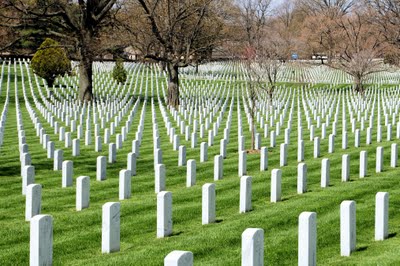
Memorial Day 2013

By Michael J.W. Stickings

(image)

On November 11 each year, Remembrance Day (also Veterans Day in the U.S.), I post a poem from the First World War, from a great poet of that apocalypse like Wilfred Owen or Isaac Rosenberg.

Today is Memorial Day in the U.S., and so today I want to post a poem by an American poet of that war.

The writer and editor Archibald MacLeish was born in Glencoe, Illinois in 1892. A future Librarian of Congress, recipient of three Pulitzer Prizes, as well as an expatriate in Paris during the swinging '20s (along with Hemingway, the Fitzgeralds, et al.), he served as an ambulance driver and artillery captain during the Great War.

MacLeish died in 1982. There's a good piece on him at the Poetry Foundation.

Here is one of his more well-known poems, "The Silent Slain":

We too, we too, descending once again
The hills of our own land, we too have heard
Far off -- Ah, que ce cor a longue haleine --
The horn of Roland in the passages of Spain,
the first, the second blast, the failing third,
And with the third turned back and climbed once more
The steep road southward, and heard faint the sound
Of swords, of horses, the disastrous war,
And crossed the dark defile at last, and found
At Roncevaux upon the darkening plain
The dead against the dead and on the silent ground
The silent slain --


My best to our American friends and family, and readers. Have a happy and safe Memorial Day. But do try to remember what it's all about.
Labels: , , , ,

Bookmark and Share

Monday, May 28, 2012

Thoughts on Memorial Day 2012


Today is Memorial Day in the United States. I am not quite sure what the appropriate wish is for this day. It's hardly a happy occasion, but is it a day to remember how great are the sacrifices required by war and how considered our decisions must be before we engage in it.

I am always troubled by the attempt of some to make regard for our military a left-right issue. I've never understood this and have a hell of time getting my head around the sentiment. Some on the right seem to think that everyone on the left is naturally presupposed to cowardice and would refuse to defend the country even if the cause was clearly just. Some on the left seem to think that everyone on the right enjoys a good war every now and again just for the hell of it. Foolishness abounds on both sides.

Although I have never had to put myself in harms way for my country, I believe that most who have are likely the greatest ambassadors for peace having seen what it is really like and knowing that there should always be very good reasons for making war.

Over the past few months I've read various accounts of U.S. involvement in wars. Most recently I read John Toland's The Last 100 Days about the end of the WWII. I read Steinbeck's Once There Was A War and Stephen Ambrose's Citizen Soldiers, both also about WWII. I reread Michael Herr's Dispatches and We Were Soldiers Once and Young by Lt. General Hal Moore and Joseph Galloway about the war in Vietnam. I even read a book called On Killing by Lt. Col. Dave Grossman, an account of the psychological ravages of having to kill in combat, a book actually used in military training.

I have always had an interest in military matters, though this hardly makes me any kind of expert. I have discovered, though, that the theme occurring most often in nearly everything I have heard or read about soldiers in war is that their primary concern is survival but perhaps even primarily providing assistance to their comrades, to do all they can to ensure as many survive as possible. Killing is hard. Doing what has to be done to protect one's fellows is most frequently the goal, though it obviously involves killing. I take comfort in this idea if it is true that under duress our minds are most strongly focused on the safety of those with whom we stand.

I understand that war and the decisions to go to war are among the most politically charged of any. I understand why these decision are sometimes couched in terms of left and right, but that is not the soldiers concern. When it comes to them, our political decision-makers put them in harms way. Soldiers do what they are asked to do if they serve well and it is for this reason they are honoured.

Despite the fact that some soldiers in every war do not comport themselves honourably, I suspect that most do. Whatever the rights and wrongs of American involvement in Iraq and Afghanistan, and I think the wrongs are most prominent, I am glad that there has been little evidence of vilifying soldiers who have served, little name-calling or other thoughtless acts as we have seen in the past.

The politicians make the decision. We civilians have a right to argue with them and vote against them, but the soldiers who carry out the orders do what they are asked to do. It would be a better world if we didn't need them at all, but we do.

We cannot know in advance how just the next war will be, should it come. Let's agree that it is good some are prepared to serve.

So, on this Memorial Day, whatever else may be true, I hope as many men and women in uniform as possible are successful in keeping themselves and their friends safe. And let us also think of the ones for whom that was not possible. It shouldn't be difficult to consider this a strongly bipartisan perspective.

(Cross-posted at Lippmann's Ghost.)

Labels: , ,

Bookmark and Share

Wednesday, June 01, 2011

Photo of the Day: Memorial Day 2011 - Stony Point, New York


This picture appeared in The New York Times yesterday. It's a fairly ordinary shot depicting an older veteran and a young boy at a Memorial Day celebration. It could be anywhere, but it happens to be in my home town of Stony Point, New York. I grew up in the area. I still have family there, though I have lived mostly in other places for the past 30 years.

According to the Times caption, the older gentleman is Arnold Rist, who is 86 years old. The youngster is Thomas Cahill, age 3. On Monday, Mr Rist played taps, as, the caption states, he has done hundreds of times at military funerals. In April 1945, it says that he was among the soldiers who liberated the inmates of Dachau concentration camp.

My sister sent the picture and she and I were trying to figure out where it was taken. We are pretty sure it's at the Stony Point Town Hall because that's where the local parades ended when she and I marched in them as part of our high school band when we took part in the annual celebrations many, many years ago.

I mention all of this, in part, because I marvel at how the political right so aggressively claims patriotism for themselves as if those of us on the left couldn't possibly understand what pride in community and the sacrifice of others means. They like to paint all of their political opponents as radically different and therefore wrong about everything.

I do hate to disappoint people like that, but I grew up in a small town. I've worked hard to understand the history, culture, and politics of my country. I take pride in what is good and criticize passionately what needs work, which is not a bad definition of patriotism from my point of view.

If you want to disagree with me, do it on the facts and not on some bogus claim that you are more American than I am simply because you think you are, as you wrap yourself in the flag and refuse to listen to any other voice but your own.

I hope everyone had a great Memorial Day and remembered to remember the sacrifices made by people like Mr. Rist and so many others.

(Cross-posted to Lippmann's Ghost.)

Labels: , , , , ,

Bookmark and Share

Monday, May 31, 2010

Memorial Day

By Mustang Bobby.

This post originally appeared at Bark Bark Woof Woof on May 25, 2009.

I grew up in Perrysburg, Ohio. It's a small town, a suburb of Toledo, and when I was a kid in the 1950's and '60's, it fit all of the images that small towns in the Midwest have: tree-shaded streets, neat homes, lots of churches, and a main street -- Louisiana Avenue -- with little shops like the drug store with the fountain, the dime store, the barber shop, the hardware store, the bakery with the smell of bread baking and the sweet scent of icing, and the bank with the solid stone exterior. They're all still there, just under different names now, and my parents, who still live there, still call the drug store by its old name, even though it's changed owners and become a jewelry shop. In the winter the Christmas decorations line the street, and each Memorial Day there is a parade that starts at the Schaller Memorial, the veterans hall, and proceeds up Louisiana Avenue, taking a turn when it reaches the Oliver Hazard Perry Memorial ("We have met the enemy and they are ours...") and marches down West Front Street past the old Victorian homes that overlook the Maumee River.

When I was a kid the parade was made up of the veterans groups like the American Legion and the VFW, and platoons of soldiers and veterans, including, through the 1970's, the last remaining veterans of World War I. They wore their uniforms and their medals, and those that couldn't march sat in the back seat of convertibles, waving slowly to the crowds that lined the sidewalks. They were followed by the marching band from the high school, the color guard, the Cub Scouts, the Boy Scouts, the Girl Scouts, the drum and bugle corps, floats from church groups, all of the city fire equipment, antique cars, and the service groups like the Shriners, the Elks, and the Kiwanis Club. After the last float came all the kids on their bicycles decorated with streamers, bunting, flags, and all the patriotic paperwork we could muster. My friends and I would try to outdo each other, and it had less to do with patriotism than it did with seeing how many rolls of red, white, and blue crepe paper we could thread in between the spokes of our wheels.

I was about ten or so on one Memorial Day when I spent a lot of time getting my Schwinn Racer ready for the big parade. It was a perfect day; the sky was a sparkling spring blue and all the floats, cars, and fire trucks were gleaming in the sun as the parade organized on Indiana Avenue in front of the Memorial Hall. The high school band in their yellow and black uniforms marched in precision as the major led off with a Sousa tune, and as the parade slowly made its way down the avenue we could see the crowds along the sidewalks waiting and waving. As we waited our turn we wheeled our bikes in circles, just like the Shriners in their little go-karts, and finally we got the signal that it was time for the kids to roll. There was an organized rush to lead off, and then we were slowly pedaling down the street, waving to everybody outside the library, the Chevy dealership, even the people lined up on the roof of the pizza parlor. I looked for my dad shooting movies with the 8mm camera, but didn't see him. Oh, well, it didn't matter; we were supposed to meet at the home of friends who were hosting a post-parade picnic in their backyard. Their house was at the end of the parade route, so that was the perfect place to pull out of the parade and have the first of many Faygo Redpops that summer.

But for some reason I stayed with the parade, on down West Front, and then up West Boundary and past the gates of Fort Meigs Cemetery. The floats and the fire trucks were gone, but what was left of the parade -- the color guard and the veterans -- went through the gates and along the path. There was no music now, just a solemn drumbeat keeping a steady muffled tapping. The color guard turned at a small stone memorial, and then past it to a gravesite where a family was gathered; a mother in a black dress, a father in a grey suit, and a teenage son and daughter, looking somber and out of place. The grave was still fresh, the dirt mounded over, the headstone a simple marker with a flag. A minister spoke some words, and then the color guard snapped to attention. A volley of rifle fire, then Taps, and then a tall young soldier in dress blues handed a folded flag to the mother, who murmured her thanks and tried to smile.

I suddenly realized that I felt out of place there with my gaudily-patriotic bike and my red-white-and-blue striped shirt. No one noticed me, though, and when the people started to slowly move away from the gravesite and back to the entrance, I followed along until I was able to ride slowly back to our friends' house, park my bike with all the others, and find my parents, who probably hadn't even noticed that I was not there with all the other kids running around and playing on the lawn.

Photo by Mark Wilson/Getty Images via Andrew Sullivan.

Labels:

Bookmark and Share

Tuesday, May 26, 2009

Kiss our American asses, world!

By Capt. Fogg

Apologize for what?
asks the e-mail. What follows is a sequence of pictures of US military cemeteries in Europe all entitled "We apologize." It ends with:

Apologize to no one. Remind those of our sacrifice and don't confuse arrogance with leadership. And we have to watch an American elected leader who apologizes to Europe and the Middle East that our country is "arrogant"! HOW MANY FRENCH, DUTCH, ITALIANS, BELGIANS AND BRITS ARE BURIED ON OUR SOIL, DEFENDING US AGAINST OUR ENEMIES?? WE DON'T ASK FOR PRAISE ... BUT WE HAVE ABSOULUTELY [sic] NO NEED TO APOLOGIZE!!

No, it's not just the typical American arrogance about the world needing to kiss our feet every day. It's not just an illustration of our stunning ignorance of history, it's just another rabble rousing attack on a president who had the honesty to say that we have often of late been perceived as arrogant and we've often been unfair to those who disagree and that others have likewise been unfair to us. It's actually one of the best things Obama has said, in my opinion, and they're not going to let him get way with such heresy; not while there remains one pitchfork-wielding and furiously ignorant psycho-patriot to arouse.

(More at Human Voices.)

Labels: ,

Bookmark and Share